The Top 10 Most Impactful Clubs and Organizations at Clemson University
Breaking down the top 10 most popular clubs and organizations at Clemson University across academics, service, sports, and Greek life—and what each offers for personal and professional growth.
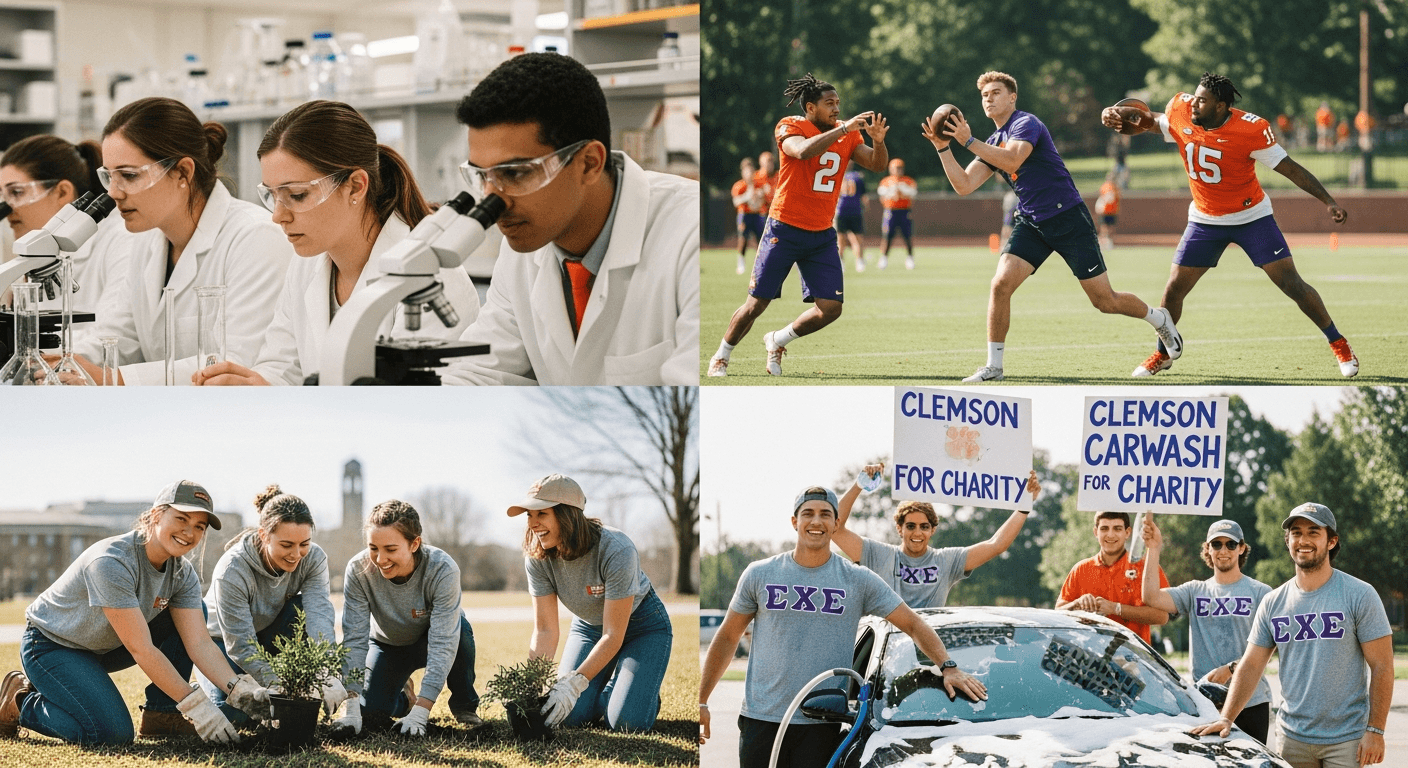
Choosing the right college isn't just about academic programs and campus facilities—it's about finding a community where you can grow, connect, and discover your potential. At Clemson University, student organizations play a pivotal role in shaping the undergraduate experience, offering opportunities for leadership development, professional networking, and meaningful social connections that extend far beyond graduation.
For prospective students evaluating whether Clemson is the right fit, understanding the landscape of student organizations can provide valuable insight into campus culture and the opportunities available. This comprehensive guide examines the ten clubs and organizations at Clemson that consistently deliver the highest positive impact on members' lives across social, academic, and professional dimensions.
These organizations were selected based on their track record of member development, the breadth of opportunities they provide, and their sustained reputation among current students and alumni. Whether you're interested in leadership, service, creative expression, or professional development, these organizations represent some of the most transformative communities you'll find on Clemson's campus.
1. Clemson University Student Government (CUSG)
Student Government at Clemson operates as the primary advocacy and programming body for the university's 27,000+ students, offering participants an unparalleled education in leadership, policy development, and organizational management.
Professional Development Impact: CUSG members gain hands-on experience with budget management (overseeing substantial allocations), policy writing, public speaking, and stakeholder engagement. Students regularly present to university administration and the Board of Trustees, developing communication skills that translate directly to corporate and nonprofit leadership roles. The organization provides training in parliamentary procedure, strategic planning, and consensus-building—competencies that give members a significant advantage in post-graduation careers.
Academic Support: While Student Government is time-intensive, the organization attracts high-achieving students who create informal academic support networks. The structured meeting schedules and deadline-driven work teach time management skills that help members balance academic demands with extracurricular commitments.
Social Connection: CUSG creates a close-knit community of ambitious students who share a commitment to improving campus life. The collaborative nature of the work—late-night planning sessions, committee meetings, campaign periods—fosters deep friendships among members. The organization also provides networking opportunities with university administrators, local government officials, and engaged alumni.
Why It Matters for Prospective Students: If you're considering Clemson and have an interest in politics, public policy, organizational leadership, or simply want to shape your college experience, CUSG offers a level of responsibility and impact that's rare in undergraduate organizations. The skills developed here—from persuasive writing to coalition-building—provide a foundation for leadership in any field.
2. Tiger Brotherhood
As Clemson's oldest service fraternity, Tiger Brotherhood combines sustained community service with intentional leadership development and brotherhood, creating a holistic model of men's organization that extends beyond traditional social fraternities.
Service Impact: Tiger Brotherhood emphasizes meaningful, long-term service partnerships rather than one-off volunteer events. Members engage in regular tutoring programs with local schools, organize campus-wide blood drives, and maintain ongoing relationships with Clemson-area nonprofits. This sustained approach allows members to see the tangible impact of their work and develop genuine relationships within the community.
Professional Development: The organization's project-based structure teaches members essential workplace skills: project management, team coordination, stakeholder communication, and resource allocation. Leadership positions rotate regularly, ensuring most active members gain experience managing teams and initiatives. Alumni networks remain strong, with graduated members often providing mentorship and career guidance to current students.
Academic and Social Support: Tiger Brotherhood maintains academic standards for membership and provides structured study hours and accountability systems. The brotherhood component creates a support network that helps members navigate academic challenges, personal difficulties, and career decisions. The organization attracts men committed to personal growth, creating a culture where members push each other toward excellence.
Why It Matters for Prospective Students: For male students interested in service, leadership, and finding a supportive community of like-minded peers, Tiger Brotherhood offers a structured path to personal development. The organization provides the social benefits of Greek life while emphasizing service and character development, making it an attractive option for students who want community without the party-centric culture of some social fraternities.
3. Clemson University Union (CUU)
The Clemson University Union functions as a student-run entertainment company, bringing concerts, comedy shows, speakers, and special events to campus while providing members with professional-level experience in event management and entertainment industry operations.
Professional Development: CUU offers hands-on experience that rivals paid internships in the events industry. Students handle contract negotiations with agents, manage substantial budgets, coordinate complex logistics, and oversee event production from concept to execution. The organization is divided into specialized committees (Concerts, Speakers, Films, Special Events), allowing members to develop expertise in specific areas while understanding the full scope of event production.
Members learn crisis management through real-world problem-solving when technical issues arise or plans change at the last minute. These practical skills—budget management, vendor coordination, timeline development, team leadership—are immediately applicable in careers ranging from hospitality and entertainment to corporate event planning and project management.
Skill Development Opportunities: CUU provides formal training through industry conferences and workshops, bringing in professionals to teach students about current trends and best practices in event management. Members also develop technical skills in areas like sound production, stage management, and marketing, depending on their committee involvement.
Social Connection: Working long hours on high-stakes events creates natural camaraderie among CUU members. The shared experience of producing successful events—and learning from the inevitable challenges—builds lasting friendships. Members also get unique access to performers and speakers, adding memorable experiences to the college journey.
Why It Matters for Prospective Students: If you're interested in event planning, entertainment, hospitality, marketing, or simply enjoy creating experiences for others, CUU provides opportunities that most universities reserve for professional staff. The scale of events and budgets involved gives members genuine professional experience that stands out to employers and graduate programs.
4. Student Legal Services Advocacy Program
While technically a service arm of Student Government, the student advocates who work with Legal Services form one of Clemson's most impactful but underappreciated organizations, providing free legal consultation to fellow students while developing critical thinking and advocacy skills.
Professional Development: Student advocates assist peers with landlord-tenant disputes, traffic tickets, contract issues, and other legal matters common to college students. They learn to research legal questions, analyze complex situations, communicate clearly about complicated topics, and maintain composure when helping someone in crisis. The organization provides extensive training, making it accessible to students without prior legal knowledge.
For pre-law students, this experience is invaluable—it provides concrete examples of client work and advocacy to discuss in law school applications and interviews. For students pursuing other fields, the analytical and communication skills developed through advocacy work translate to problem-solving in any profession.
Academic Relevance: The work complements coursework in political science, psychology, business, and other fields by applying theoretical knowledge to real-world scenarios. Advocates develop research skills and learn to synthesize information from multiple sources—competencies that improve academic performance.
Impact on Others: Beyond personal development, advocates provide a vital service to the Clemson community, helping students navigate legal challenges that could otherwise derail their academic progress or financial stability. This direct impact on peers' lives makes the work particularly meaningful.
Why It Matters for Prospective Students: This organization offers a rare opportunity for undergraduates to engage in advocacy work with real consequences. Whether you're interested in law, policy, counseling, or simply want to develop elite problem-solving and communication skills, the Student Legal Services Advocacy Program provides experience that few undergraduate organizations can match.
5. Clemson Dancers
Clemson Dancers is a student-run dance company that produces multiple full-scale performances annually, featuring choreography across diverse styles and providing a creative outlet that balances the academic rigor of university life.
Artistic Development: Members work with student choreographers to bring original works to life, developing technical skills across multiple dance styles. The rehearsal-to-performance process teaches discipline, attention to detail, and how to take creative direction—skills that extend beyond dance. Choreographers gain experience creating original work, managing rehearsals, and seeing their artistic vision realized on stage.
Personal Growth: The commitment required—typically 10+ hours of rehearsal weekly during production periods—teaches time management and prioritization. Members learn to balance this demanding schedule with academic responsibilities, developing organizational skills that serve them throughout their careers. The performance aspect builds confidence and comfort with high-pressure situations.
Community Building: The intensive rehearsal process creates exceptionally close bonds among members. Dancing requires trust—literal trust in partnering work—that translates to emotional support and lasting friendships. Clemson Dancers attracts students from diverse majors (engineering, business, nursing, sciences), creating an interdisciplinary community united by passion for dance.
Production Experience: Beyond dancing, the organization offers opportunities in lighting design, costume coordination, marketing, and stage management. These production roles provide transferable skills in project coordination, technical execution, and creative problem-solving.
Why It Matters for Prospective Students: If you're a dancer wondering whether you can continue performing in college while pursuing a demanding major, Clemson Dancers demonstrates that it's possible. The organization provides a creative outlet that balances academic stress while teaching discipline and commitment. For prospective students who value arts and creative expression, the presence of a robust dance program indicates a campus culture that values well-rounded development.
6. Professional Fraternities: Alpha Kappa Psi, Delta Sigma Pi, and Phi Alpha Delta
Clemson's professional fraternities bridge the gap between social Greek life and career development, creating communities focused on professional preparation while maintaining the brotherhood/sisterhood and service elements that make Greek organizations valuable.
Career Development Focus: Professional fraternities prioritize career preparation through resume workshops, mock interviews, company tours, networking events, and direct connections to recruiters. Alpha Kappa Psi and Delta Sigma Pi serve business students, while Phi Alpha Delta focuses on pre-law students. These organizations maintain strong alumni networks that provide mentorship, internship opportunities, and job connections.
Leadership Experience: Professional fraternities rotate leadership positions regularly, ensuring most active members gain experience managing teams, budgets, and initiatives. These hands-on leadership opportunities provide concrete examples to discuss in job interviews and graduate school applications.
Academic Support: Many professional fraternities maintain study groups, academic accountability systems, and mentorship programs that connect younger members with successful upperclassmen. The organizations attract achievement-oriented students, creating peer groups that encourage academic excellence.
Balanced Social Life: While focused on professional development, these organizations also provide social events, brotherhood/sisterhood activities, and service projects. Members get the community benefits of Greek life without necessarily committing to the more intensive social calendar of traditional fraternities and sororities.
Field-Specific Benefits: Each organization tailors programming to its field. Business fraternities bring in corporate recruiters and executives, organize case competitions, and provide industry-specific skill development. Phi Alpha Delta offers LSAT preparation, law school admissions guidance, and connections to attorneys and judges.
Why It Matters for Prospective Students: If you're interested in business or law and want a structured approach to career preparation embedded in a supportive community, Clemson's professional fraternities offer significant value. The combination of networking opportunities, skill development, and peer support can accelerate career preparation and provide a competitive advantage in internship and job searches.
7. Cultural Organizations: NAACP, Hispanic American Student Association, and International Student Association
Clemson's cultural organizations provide essential community, advocacy, and education functions, creating spaces where students can celebrate their identities while contributing to a more inclusive campus environment.
Community and Belonging: For students from underrepresented backgrounds, cultural organizations provide crucial social anchors—places to find community, celebrate cultural heritage, and connect with others who share similar experiences. This sense of belonging can significantly impact student retention, academic success, and overall well-being.
Academic Support Networks: Many cultural organizations maintain formal or informal mentorship programs, connecting first-year students with upperclassmen who've successfully navigated Clemson's academic landscape. Study groups, scholarship information sharing, and academic accountability help members succeed in the classroom.
Leadership and Advocacy: Cultural organizations plan heritage month celebrations, speaker events, and awareness campaigns that educate the broader campus community. Leading these initiatives develops organizational skills, public speaking abilities, and experience with advocacy—competencies that translate directly to workplace diversity initiatives and community organizing.
Professional Networking: Alumni from cultural organizations often maintain strong connections to current students, providing mentorship and career guidance. These networks can be particularly valuable for students navigating predominantly white professional spaces, offering advice on workplace dynamics and cultural code-switching.
Campus Impact: Beyond member benefits, these organizations make Clemson more welcoming and inclusive for all students. Their educational programming challenges stereotypes, broadens perspectives, and creates opportunities for cross-cultural understanding.
Why It Matters for Prospective Students: For students from underrepresented backgrounds considering Clemson, the presence and strength of cultural organizations can be a deciding factor. These groups provide community and support that can make the difference between thriving and merely surviving at a predominantly white institution in a small Southern town. For all prospective students, robust cultural organizations indicate a campus working toward inclusivity and providing diverse perspectives.
8. Engineers for a Sustainable World and Engineering Ambassadors
For STEM students, these organizations represent two complementary approaches to engineering involvement—one focused on hands-on technical projects addressing sustainability challenges, the other on outreach and representation of Clemson's engineering programs.
Engineers for a Sustainable World: Technical Application
ESW works on real-world engineering projects addressing sustainability issues locally and globally. Projects have included designing water filtration systems for developing communities, creating campus sustainability initiatives, and building renewable energy solutions.
The hands-on project work complements classroom learning by applying theoretical knowledge to practical problems. Members experience the full engineering design process—research, design, prototyping, testing, iteration, and implementation. This applied learning deepens technical understanding while teaching the "messy" aspects of real engineering that textbooks often skip: managing projects with limited resources, redesigning after failures, and communicating technical concepts to non-technical stakeholders.
Engineering Ambassadors: Communication and Leadership
Engineering Ambassadors represent Clemson's College of Engineering at recruitment events, campus tours, and K-12 outreach programs. This work develops communication skills that are crucial for engineering careers but often underdeveloped in technical curricula—the ability to make complex concepts accessible and engaging to diverse audiences.
Ambassadors also build relationships with faculty, administrators, and alumni, creating networking opportunities and gaining insight into academic and professional pathways within engineering.
Combined Benefits
Both organizations offer strong networking opportunities with sustainability-focused companies, nonprofit organizations, and engineering firms. The professional development is organic rather than forced—relationships build through shared work on meaningful projects or genuine conversations during outreach events.
Why It Matters for Prospective Students: If you're considering engineering at Clemson and want to apply your technical skills to real problems or develop the communication abilities that distinguish good engineers from great ones, these organizations provide opportunities that directly complement classroom learning. They demonstrate Clemson's commitment to hands-on learning and holistic engineering education.
9. Student Media Organizations: The Tiger, WSBF Radio, and Tiger Media
Clemson's student media organizations operate at a professional level, providing journalism, broadcasting, and media production experience that prepares students for careers in communications, marketing, and media industries.
The Tiger Newspaper: Journalistic Experience
The Tiger operates as a genuine newsroom, covering campus news, sports, arts, and opinion. Student journalists conduct interviews, investigate stories, meet publication deadlines, and see their work published for thousands of readers. The accountability is real—errors are public, and missed deadlines have consequences. This pressure creates rapid skill development that classroom simulations cannot replicate.
Reporters learn research techniques, interviewing skills, clear writing under deadline pressure, and editorial judgment. Editors develop management skills, guiding reporters, making editorial decisions, and maintaining publication standards.
WSBF Radio: Broadcasting Skills
WSBF provides hands-on experience with radio broadcasting, audio production, and live performance. Whether hosting shows, producing content, or managing station operations, members develop technical skills with industry-standard equipment and gain comfort with live performance and spontaneous communication.
Tiger Media: Video Production
Tiger Media handles video production for athletics, university communications, and student organizations. Members learn professional video production techniques, work with high-quality equipment, and build portfolios that can lead to employment or freelance opportunities.
Transferable Skills Across All Media Organizations
All three media organizations teach members to accept criticism constructively, iterate quickly based on feedback, and produce quality work under tight deadlines. The editorial autonomy students have—making decisions about content, pitching stories, developing creative concepts—builds confidence and professional judgment.
Why It Matters for Prospective Students: If you're considering communications, journalism, marketing, or media production as potential careers, Clemson's student media organizations provide professional-level experience and portfolio development opportunities. Even if you're pursuing other fields, these organizations offer valuable skills in communication, storytelling, and content creation that enhance any career path. The presence of independent, student-run media also indicates a campus culture that values free expression and student voice.
10. ClemsonLIFE
ClemsonLIFE is a comprehensive transition program for young adults with intellectual disabilities, providing a four-year university experience that includes academic enrichment, career development, independent living instruction, and social engagement. While primarily serving students with intellectual disabilities, the peer mentor and ally community surrounding ClemsonLIFE creates transformative experiences for all involved.
For Peer Mentors: Personal Growth
Students who work as peer mentors with ClemsonLIFE consistently describe the experience as life-changing. Mentors support ClemsonLIFE students as they navigate college life, develop independent living skills, and pursue educational and career goals. This work requires creativity, patience, flexibility, and genuine respect for different ways of learning and being in the world.
Peer mentors report profound shifts in their understanding of disability, ability, inclusion, and human potential. They develop communication skills that transfer to any career requiring empathy and adaptability. The experience challenges assumptions and expands worldviews in ways that purely academic learning cannot achieve.
Professional Applications
For students entering education, healthcare, social work, therapy, or human resources, ClemsonLIFE experience is directly applicable and highly valued. But even for those pursuing unrelated fields, demonstrable commitment to diversity, equity, and inclusion strengthens graduate school applications and appeals to employers increasingly focused on building inclusive workplaces.
Reciprocal Benefits
The relationships formed between ClemsonLIFE students and peer mentors are genuinely reciprocal—both groups gain friendship, support, and enriched college experiences. Study groups, social events, and informal hangouts create authentic community rather than one-directional service relationships.
Campus Culture Impact
ClemsonLIFE's presence changes campus culture, creating opportunities for students across the university to engage with disability inclusion. Peer mentors often become advocates for accessibility and inclusion in other organizations and contexts, creating ripple effects that extend far beyond the program itself.
Why It Matters for Prospective Students: For prospective students interested in disability services, inclusive education, or social impact work, ClemsonLIFE demonstrates Clemson's commitment to creating a truly inclusive campus. For all students, ClemsonLIFE's presence indicates a campus culture that values diverse learners and creates opportunities for meaningful cross-community engagement. The program represents higher education at its best—expanding access while enriching the experience for all community members.
Making Your Decision: What These Organizations Reveal About Clemson
Beyond the specific benefits of each organization, the existence and strength of these communities reveal important aspects of Clemson's institutional character and campus culture:
Commitment to Student Leadership: Organizations like CUSG and CUU demonstrate that Clemson entrusts students with significant responsibility and resources, indicating institutional confidence in student capabilities and commitment to leadership development.
Support for Diverse Interests: The range of organizations—from dance to engineering to media to cultural communities—shows that Clemson provides space for varied interests and identities, not just the stereotypical Southern football culture.
Professional Preparation: The strength of professional development organizations and pre-professional programs indicates that Clemson is invested in career preparation and maintains strong connections to employers and industries.
Service Orientation: Multiple top organizations emphasize community service and social impact, reflecting Clemson's land-grant mission and culture of public service.
Inclusive Community Building: Organizations like ClemsonLIFE and cultural groups demonstrate commitment to building an inclusive campus where diverse students can find community and support.
Questions to Ask During Your Campus Visit
If you're considering Clemson, here are questions to ask about student organizations during your campus visit:
How accessible are leadership positions in major organizations? Do they rotate regularly or concentrate among the same students?
What percentage of students participate in at least one organization? How does involvement correlate with retention and graduation rates?
How does the university support student organizations financially and logistically?
Are there mechanisms for starting new organizations if your interest isn't represented?
How do organization commitments balance with academic demands, especially in rigorous majors?
What kind of alumni networks exist for major organizations, and do they actively mentor current students?
Final Considerations
Student organizations transform college from a transactional experience (attend classes, get degree) into a formative one (discover passions, build community, develop leadership). The ten organizations profiled here represent some of Clemson's strongest communities for personal, professional, and social development.
However, remember that the "best" organization for you depends on your interests, goals, and values. A student interested in performance art will find more value in Clemson Dancers than in a professional business fraternity. Someone passionate about social justice might prioritize cultural organizations or advocacy work over event planning.
The real question isn't whether these specific organizations align with your interests, but whether Clemson offers a breadth of quality organizations across domains that matter to you. The presence of robust student organizations in leadership, service, arts, professional development, cultural celebration, technical application, media, and inclusive community building suggests a campus where diverse students can find their place and thrive.
As you evaluate colleges, consider not just academic programs and campus facilities, but the communities you'll join and the experiences you'll have outside the classroom. These organizations and the students who participate in them will shape your college experience as much as any lecture or exam. Choose a school where you can see yourself not just studying, but belonging, leading, creating, and growing into the person you want to become.